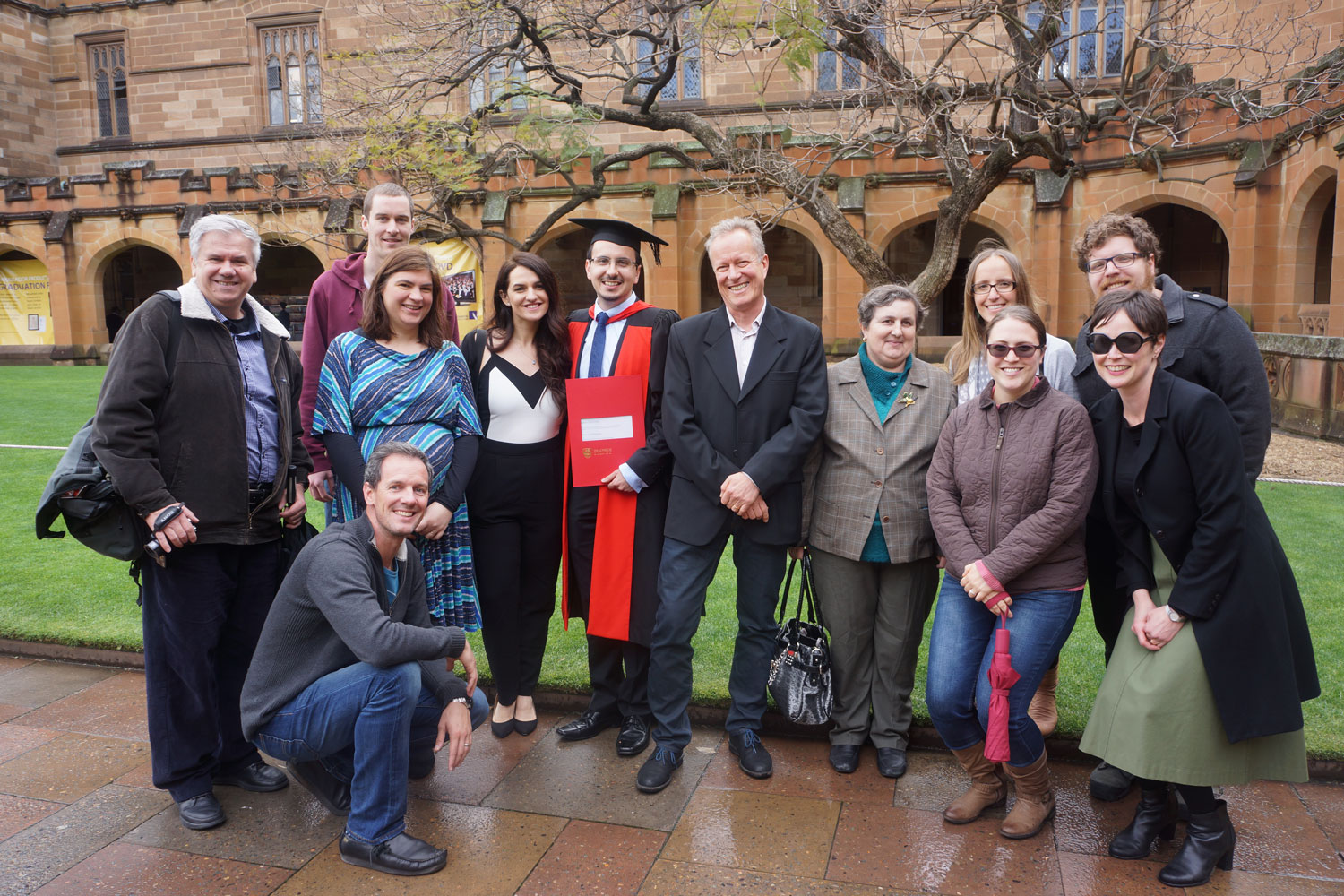
 Today, EarthByter Sabin Zahirovic was officially conferred his degree. Sabin’s PhD thesis was entitled ‘Post-Pangea global plate kinematics and geodynamic implications for Southeast Asia’.
Congratulations Dr Zahirovic! … Read more…

Here are all the latest EarthByte news posts. See News Archive for recent years.
EarthByte also publishes the ‘GPlates News‘ newsletter every quarter. The GPlates newsletter contains features such as the latest GPlates updates, tutorials and datasets, EarthByte news highlights and much more! Click here to view the latest and past editions of ‘GPlates News‘, or subscribe to receive the newsletters.
The 2015 Ocean Innovation (OI) conference takes place in St. John’s, Newfoundland and Labrador, Canada during October and focuses on “mapping our oceans.” For each OI conference, a special issue of The Journal of Ocean Technology (JOT) that complements the conference’s theme is released. A series of essays, peer review technical papers, and columns are included and … Read more…
The 2015 Ocean Innovation (OI) conference takes place in St. John’s, Newfoundland and Labrador, Canada during October and focuses on “mapping our oceans.” For each OI conference, a special issue of The Journal of Ocean Technology (JOT) that complements the conference’s theme is released. A series of essays, peer review technical papers, and columns are included and … Read more…
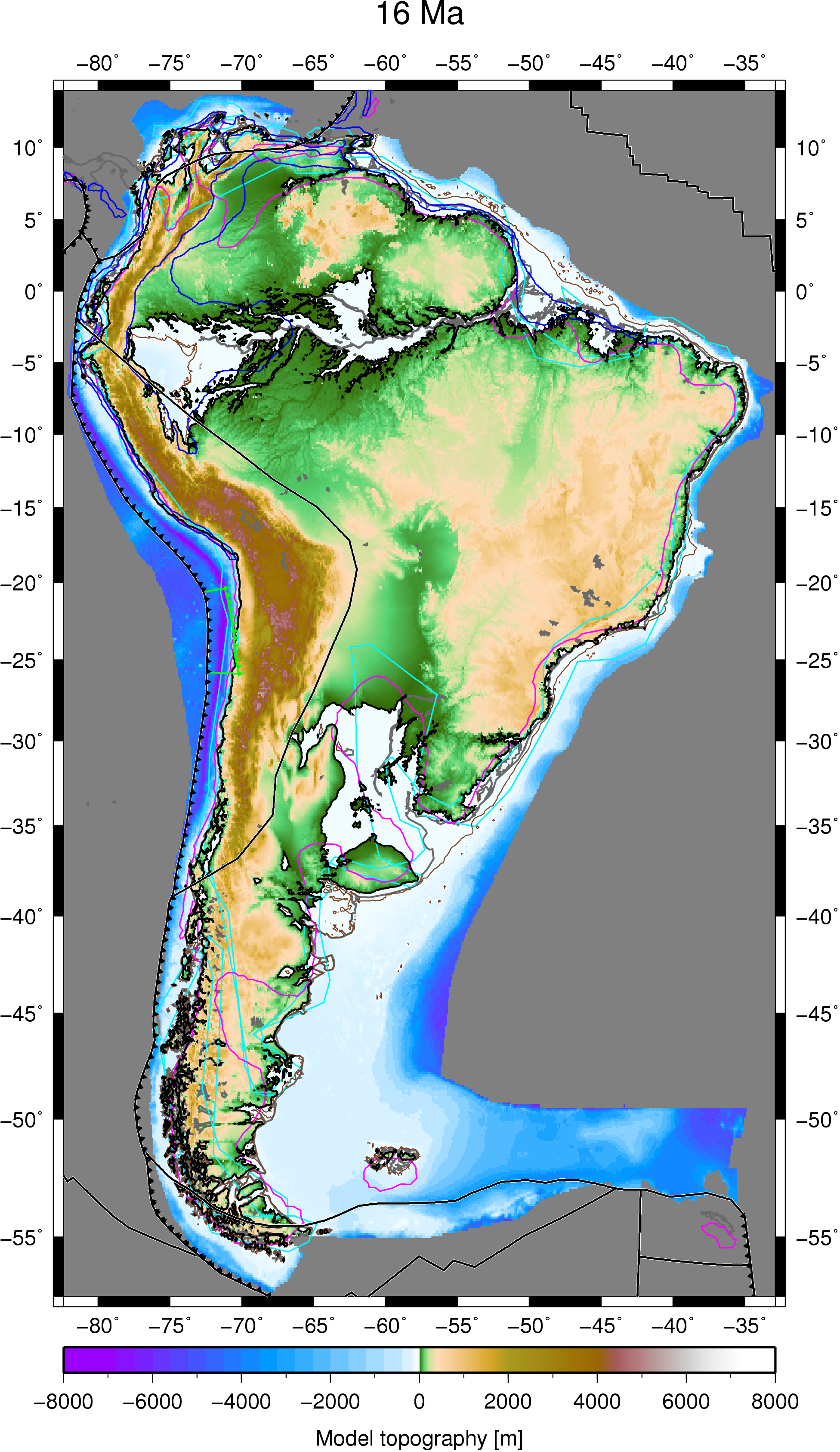
Flament, N., Gurnis, M., Müller, R. D., Bower, D. J., & Husson, L. (2015). Influence of subduction history on South American topography. Earth and Planetary Science Letters, 430, 9-18. doi: 10.1016/j.epsl.2015.08.006. Influence of subduction history on South American topography
Today, EarthByter Sabin Zahirovic was officially conferred his degree. Sabin’s PhD thesis was entitled ‘Post-Pangea global plate kinematics and geodynamic implications for Southeast Asia’.
Congratulations Dr Zahirovic! … Read more…
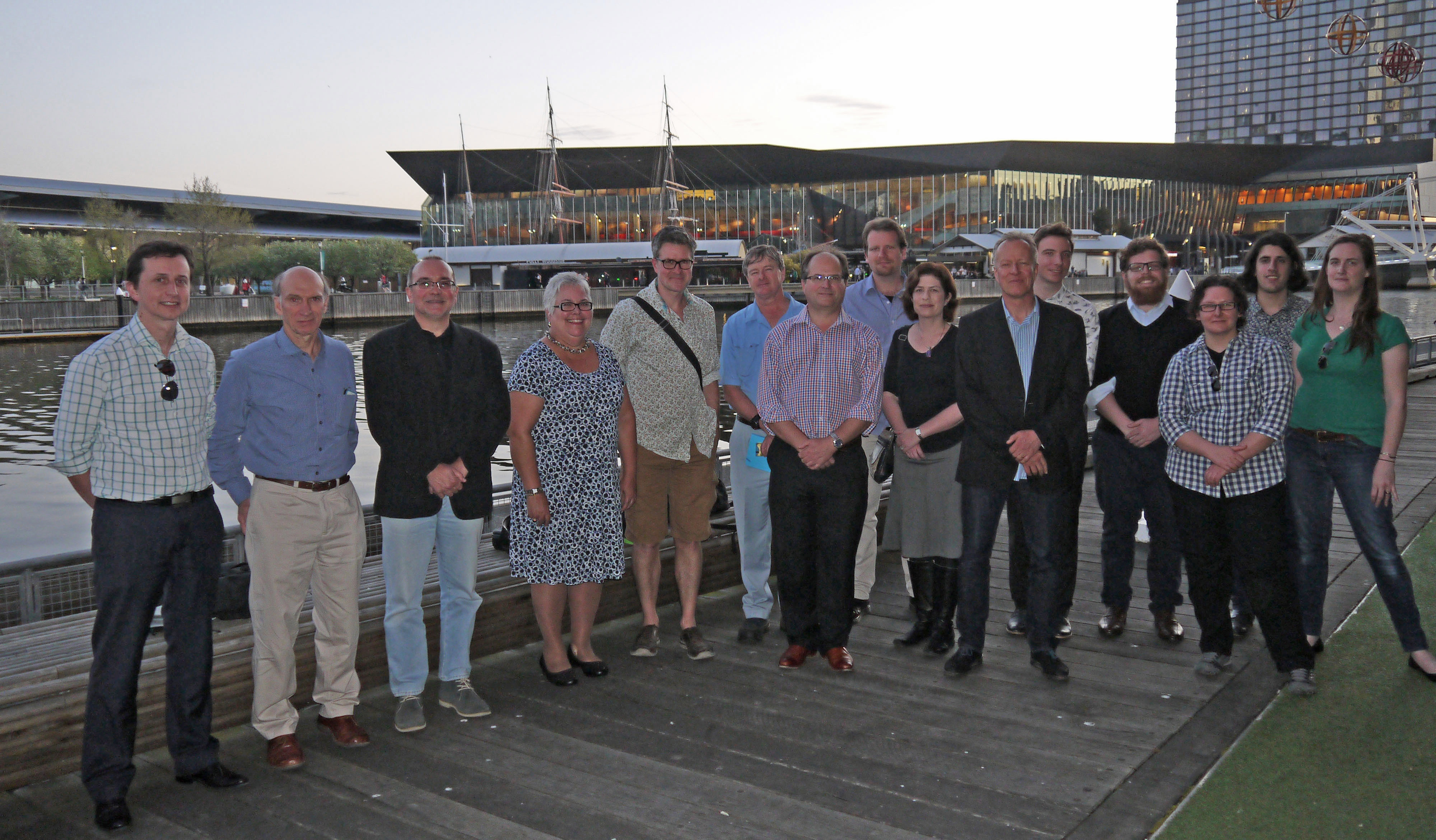
Basin Hub members met in Melbourne during the AAPG ICE meeting for a short meeting, which included an overview of the hub for members new to it, an update of the hub’s organisational structure and a review of recent achievements and the research program for the next 12 months.
… Read more…
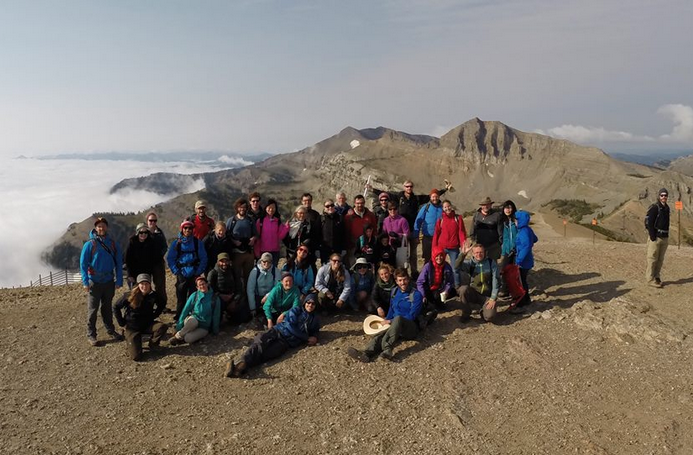
Nicky Wright recently attended the 2-week graduate summer course ‘Mountain Ranges and High Plateaus‘, held at the University of Michigan’s field station in Wyoming. This was only the second time the University of Michigan has held this course, which featured instructors from five other U.S. universities and international and U.S. graduate students from both the … Read more…
Nicky Wright recently attended the 2-week graduate summer course ‘Mountain Ranges and High Plateaus‘, held at the University of Michigan’s field station in Wyoming. This was only the second time the University of Michigan has held this course, which featured instructors from five other U.S. universities and international and U.S. graduate students from both the … Read more…
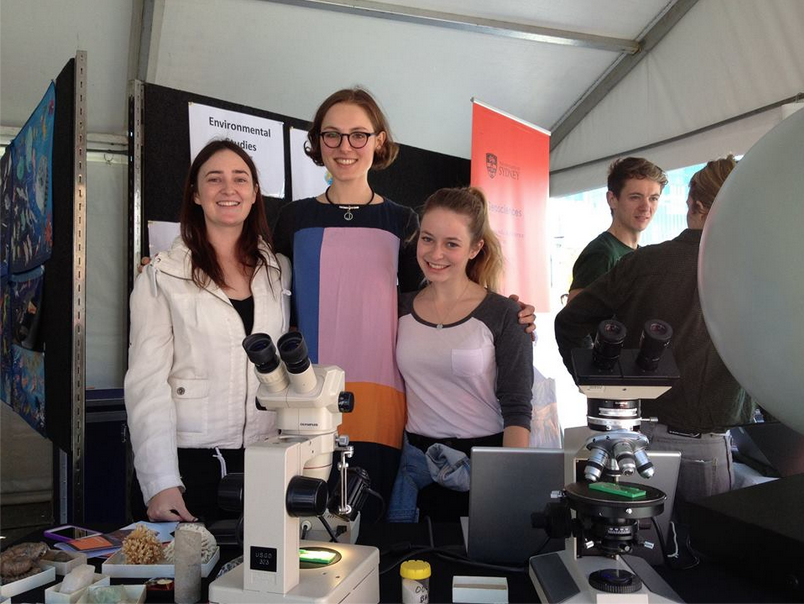
We are very proud of our team of volunteers who represented EarthByte at the University of Sydney Open Day on Saturday. EarthByte had six volunteers who set up at 8am, and presented activities at the Eastern Avenue hands-on interactive stations until 4pm. This is a great outreach activity, and very reassuring to see the new generations get … Read more…
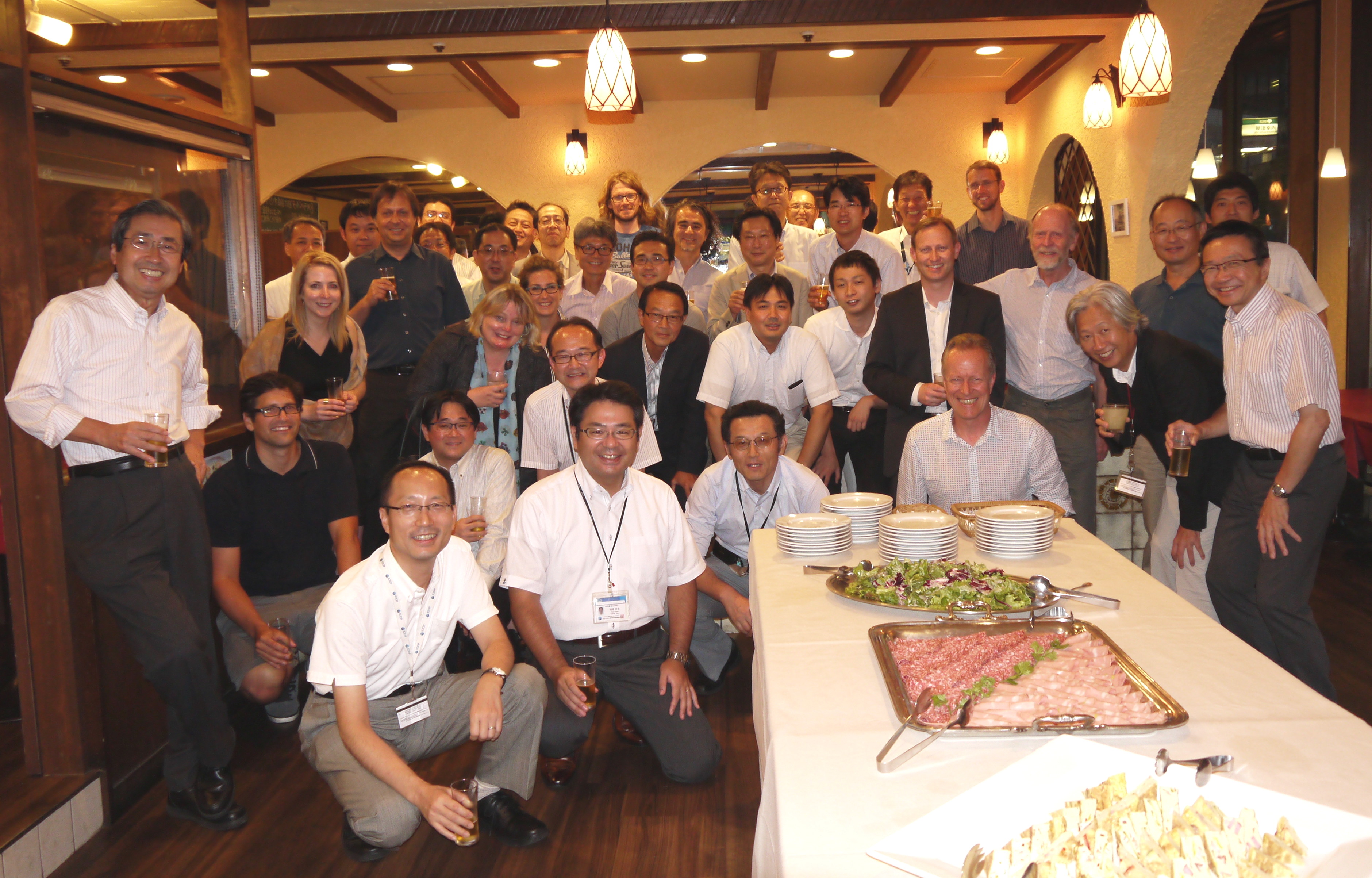
A group of international scientists, including EarthByter Dietmar Müller, is gathering this week at the Japan Agency for Marine-Earth Science and Technology (JAMSTEC) in Tokyo to put the finishing touches on an IODP proposal to drill through the Cretaceous stratigraphic section of the Lord Howe Rise (LHR), a submerged continental fragment that was once part of eastern Gondwanaland. The principal Australian agency in this collaborative project with JAMSTEC is Geoscience Australia, with Andrew Heap playing a leading role. The main emergent part of the LHR today is Lord Howe Island, an eroded remnant of a 7 million year old shield volcano, known to many Australians as a fine, but slightly pricey, getaway from the hustle and bustle of city life, full of kingfish, great beaches, a pristine coral reef and excellent outcrops of volcanic rocks and calcarenites. But what does not meet the eye is what lies underneath: several kilometers of Cenozoic and Cretaceous sediments that provide a rich record of subduction along eastern Gondwanaland, … Read more…
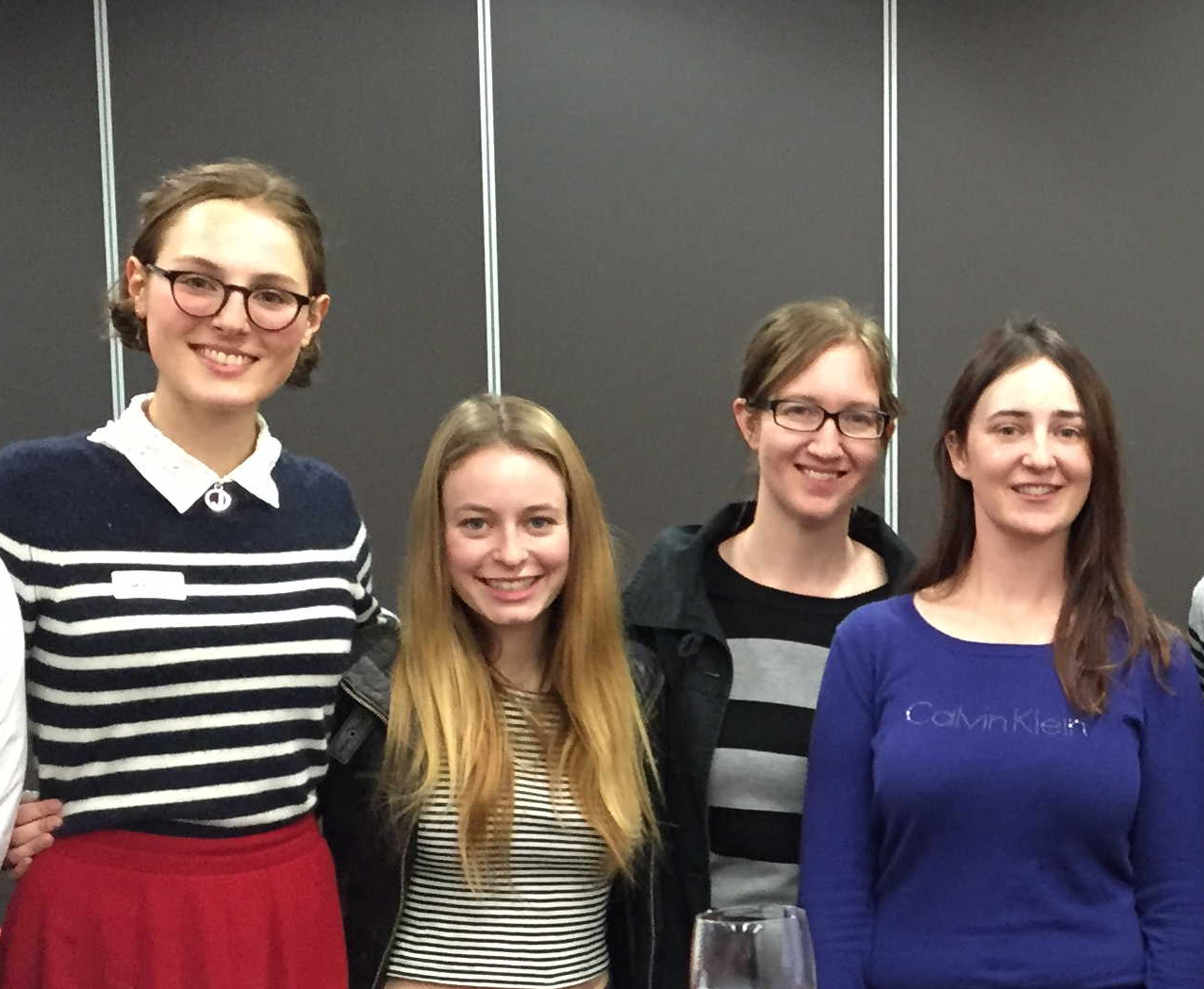
This week EarthByte welcomes new Research Assistants Jodie Pall, Lauren Harrington, Joanna Tobin and Lena O’Toole to the group. Lena, Lauren and Joanna are hired through the Basin GENESIS Hub project and Jodie is hired through a Discovery project fund. Congratulations and welcome! Our long-time Research Assistants Serena Yeung and James Egan will also be working with the … Read more…
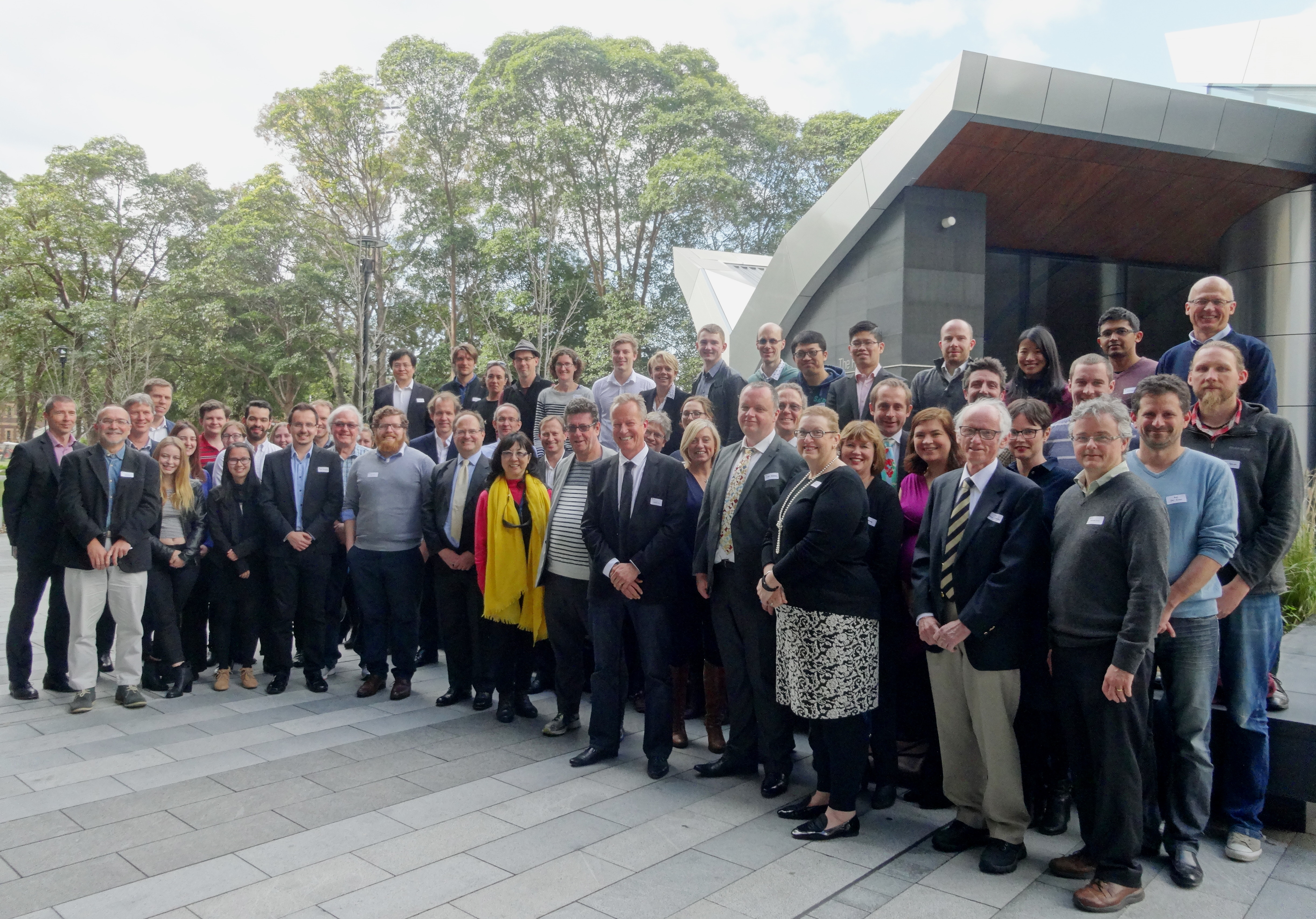
 The ARC Research Hub for Basin Geodynamics and Evolution of Sedimentary Systems (Basin GENESIS Hub) opened today at a reception held in the Charles Perkins Centre at the University of Sydney. The launch as attended by representatives from Universities, industry, Geoscience Australia, the ARC, the NCI and the Office of the NSW Chief Scientist and Engineer.
The Basin GENESIS Hub will use computer modelling to fine-tune our understanding of the nation’s sedimentary basins, which hold many of the natural resources we use in day-to-day life.
The research will be of fundamental importance to the geo-software industry used by exploration and mining companies, explains Hub Director Professor Dietmar Müller from the University of Sydney. … Read more…
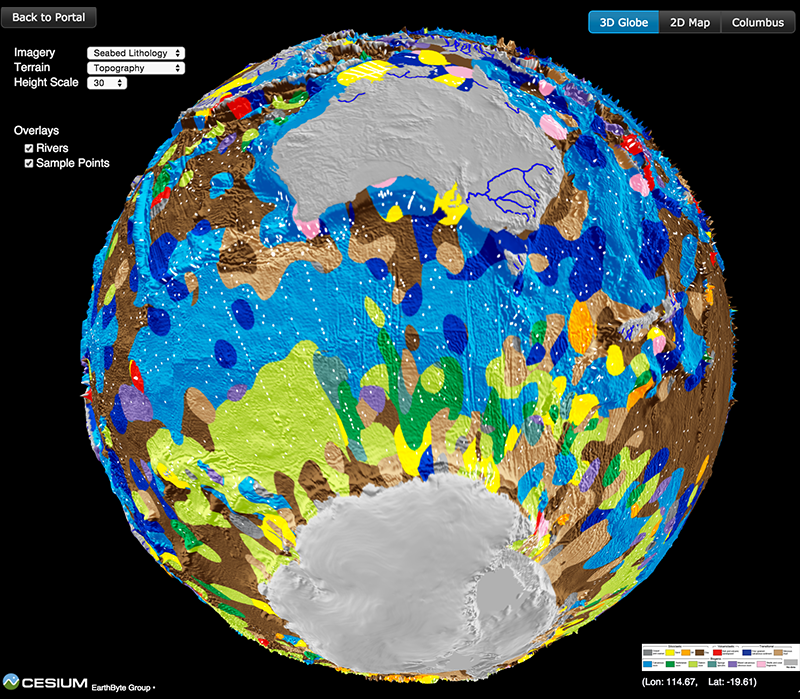
 The recently-published ocean sediment map made by Dr Adriana Dutkiewicz and colleagues has taken the world’s media by storm. It’s been reported online and in press, from Australia to Cuba, Hungary and many other countries! See the updated list of media items below, and check out the link to the interactive 3D globe with the ocean sediments map.
Countries where the story has been covered so far:
Australia, UK, USA, India, Italy, Germany, Spain, Hungary, Austria, Cuba, Costa Rica and Peru.
Radio Interviews
ABC 774 Melbourne
World’s first digital seafloor map reveals ‘paradise’ – ABC Rural Radio
ABC 702 Sydney
BBC Radio 5 Live’s “Up All Night”
It took more than a year of research and sifting through thousands of samples to generate the world’s first digital map of the seafloor – ABC Country Radio (Interview at 41:10) … Read more…
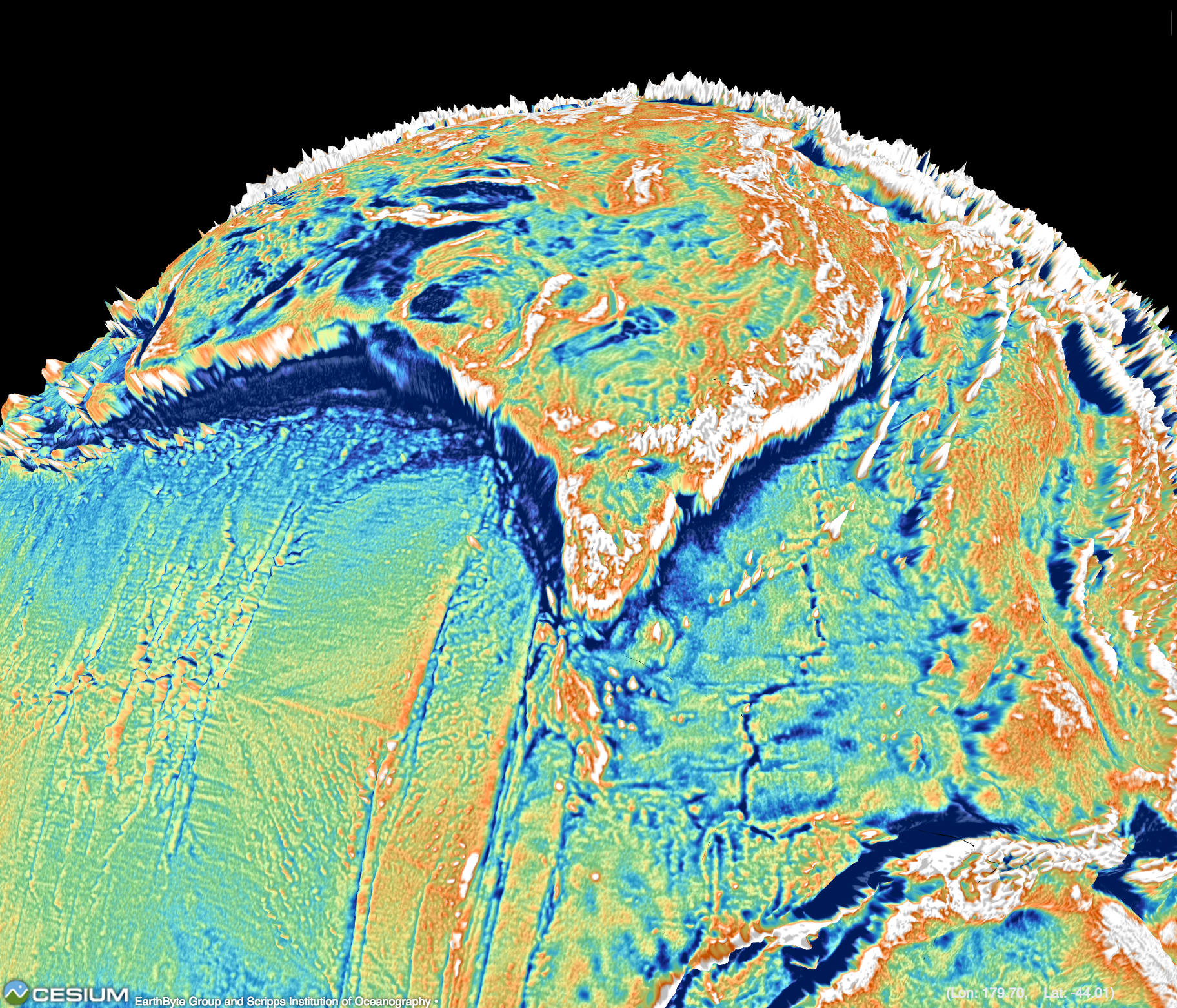
Today we officially launch the new EarthByte website! The new site has dedicated ‘Global Plate Models’ and ‘GPlates’ pages (Resources) for quick and easy access to our published GPlates-compatible kinematic models, search bar functionality, a responsive layout that is compatible with handheld devices, detailed people pages, an ‘Outreach’ space, and news, awards, media and research … Read more…
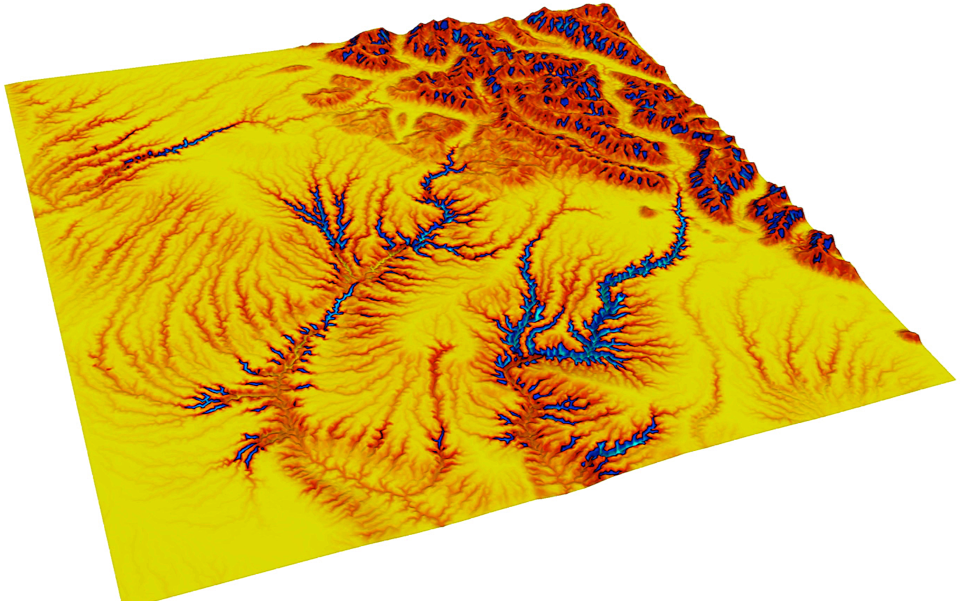
Today Tristan has released version 1.0 of Badlands, a parallel TIN-based landscape evolution model, built to simulate topography development at various space and time scales. Congratulations Tristan! Download Badlands (source code, documentation and examples) from GitHub here
A team led by the University of Sydney School of Geosciences has created the first digital globe of seafloor sediments.
Ocean sediments cover 70% of our planet’s surface, forming the substrate for the largest ecosystem on Earth and its largest carbon reservoir – but the most recent map of seafloor geology was drawn by hand over 40 years ago, at the dawn of modern ocean exploration.
That’s about to change. In a gargantuan effort Adriana Dutkiewicz and her colleagues carefully analysed and categorised 15,000 seafloor sediment samples to reveal the nature of sedimentary blankets over ocean ridges, seamounts and the vast abyssal plains. She teamed up with big data experts to find the best way to use modern computer algorithms to turn the vast sea of point observations into a continuous digital map. … Read more…
An upcoming IODP expedition along the WA coast led by Prof Stephen has received significant media attention. The two month expedition will be drilling into the seabed in order to examine the climatic conditions of the North West continental shelf over the past five million years.
Big Data Knowledge Discovery is an interdisciplinary research initiative that focuses on the scientific challenges and opportunities presented by the use of the new techniques of data science applied in the natural sciences. This research initiative brings together world class discipline leaders in the data-intensive sciences of Geo Sciences, Life Sciences and Physical Sciences with … Read more…
Dutkiewicz, A., Müller, R. D., O’Callaghan, S., & Jónasson, H. (2015). Census of seafloor sediments in the world’s ocean. Geology, G36883-1. doi: 10.1130/G36883.1. Census of seafloor sediments in the world’s ocean
Dutkiewicz, A., Müller, R. D., O’Callaghan, S., & Jónasson, H. (2015). Census of seafloor sediments in the world’s ocean. Geology, G36883-1. doi: 10.1130/G36883.1. Census of seafloor sediments in the world’s ocean
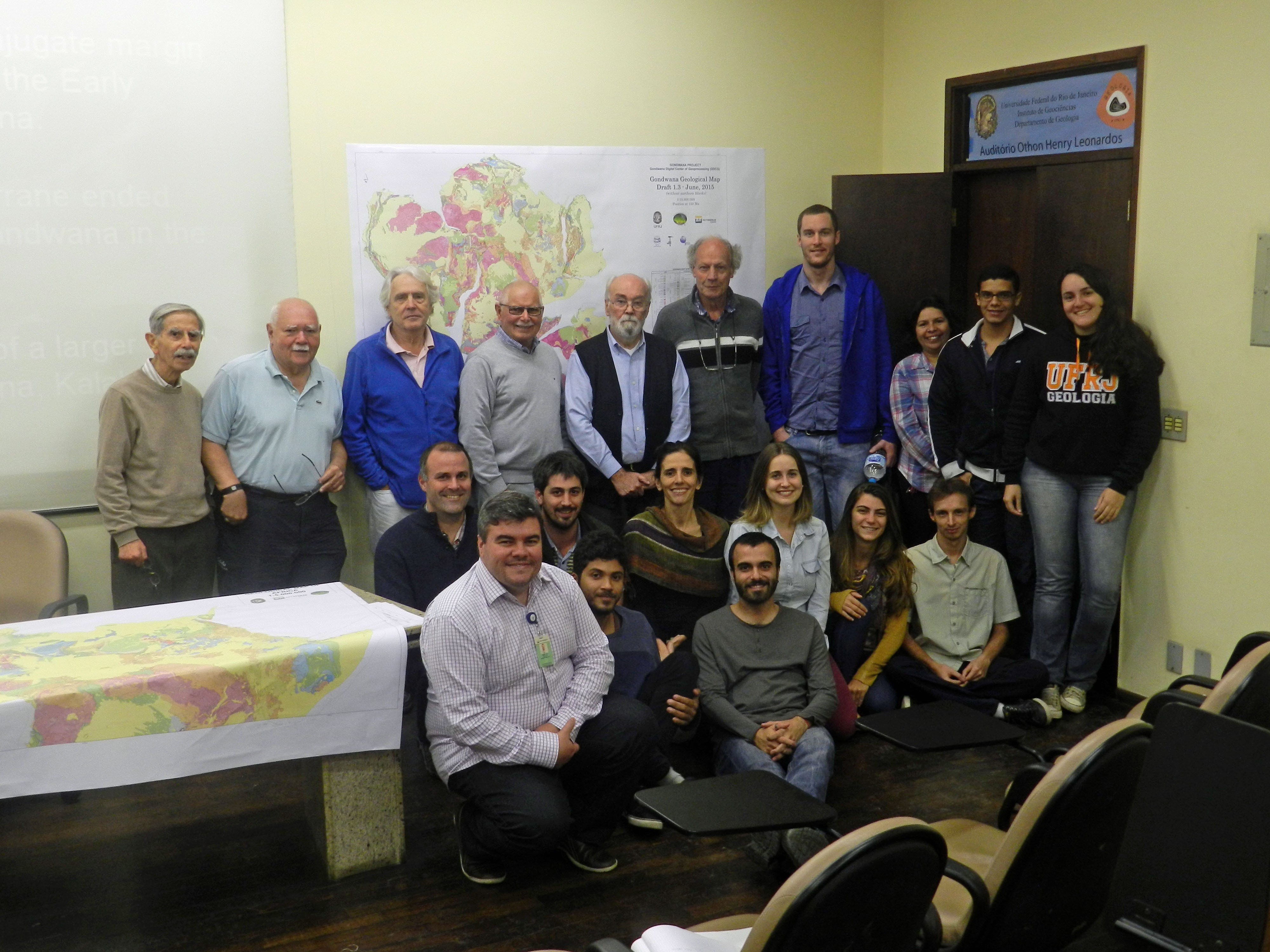
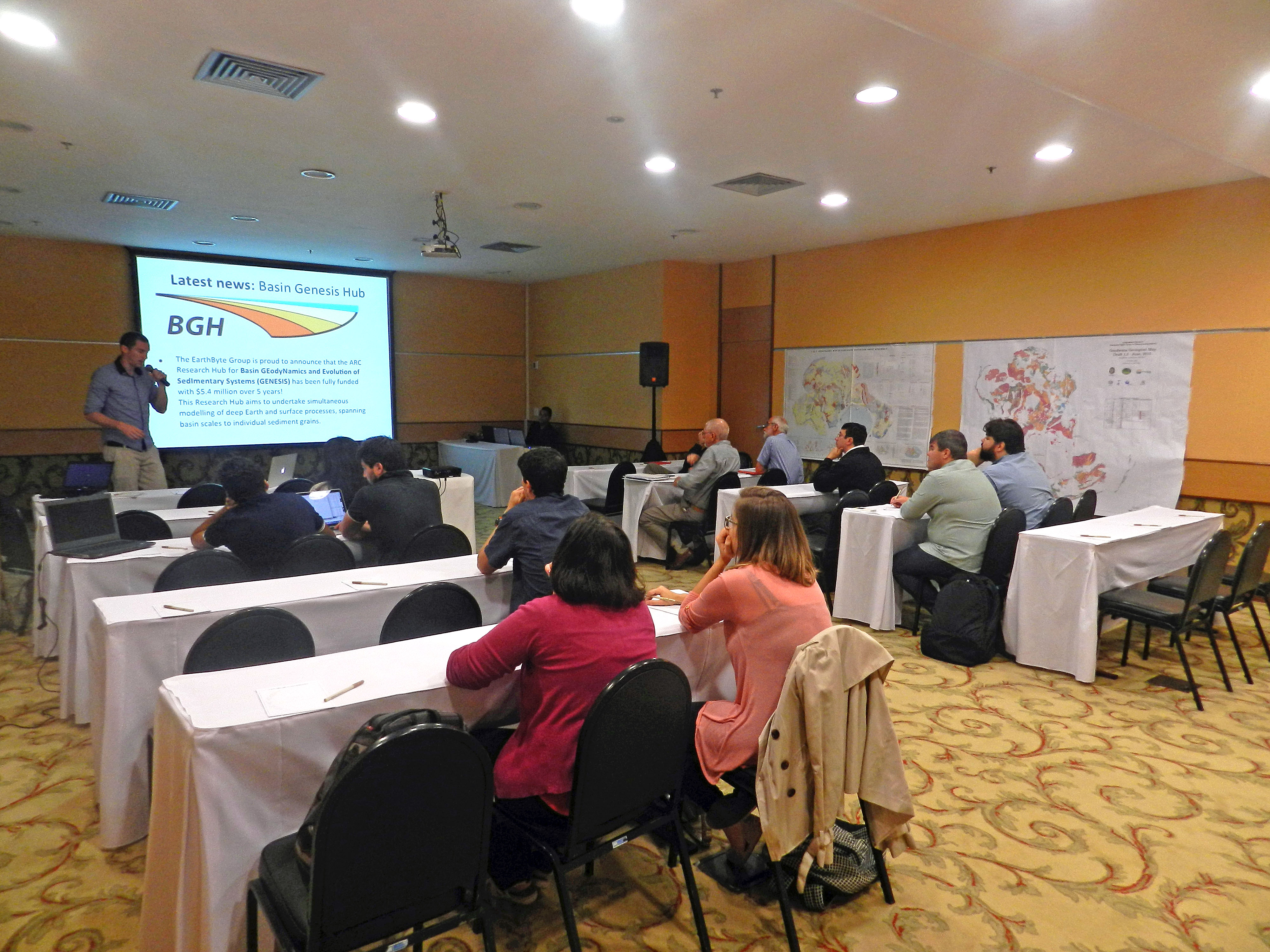 Recently the EarthByte group was invited to participate in the two-week long ‘Rio Gondwana Workshop’, in Rio de Janeiro (22nd June – 3rd July), that focused on the development of a new Gondwana geology map. This is part of the IGCP Project 628 – The Gondwana Map Project. The collaborators involved in this project were very interested in incorporating GPlates into their workflow for developing the Gondwana geological map.
PhD candidate Nicholas Barnett-Moore represented the EarthByte Group. He participated in a week-long discussion on the efforts and new thinking required to develop a new geological map(s) of Gondwana. … Read more…
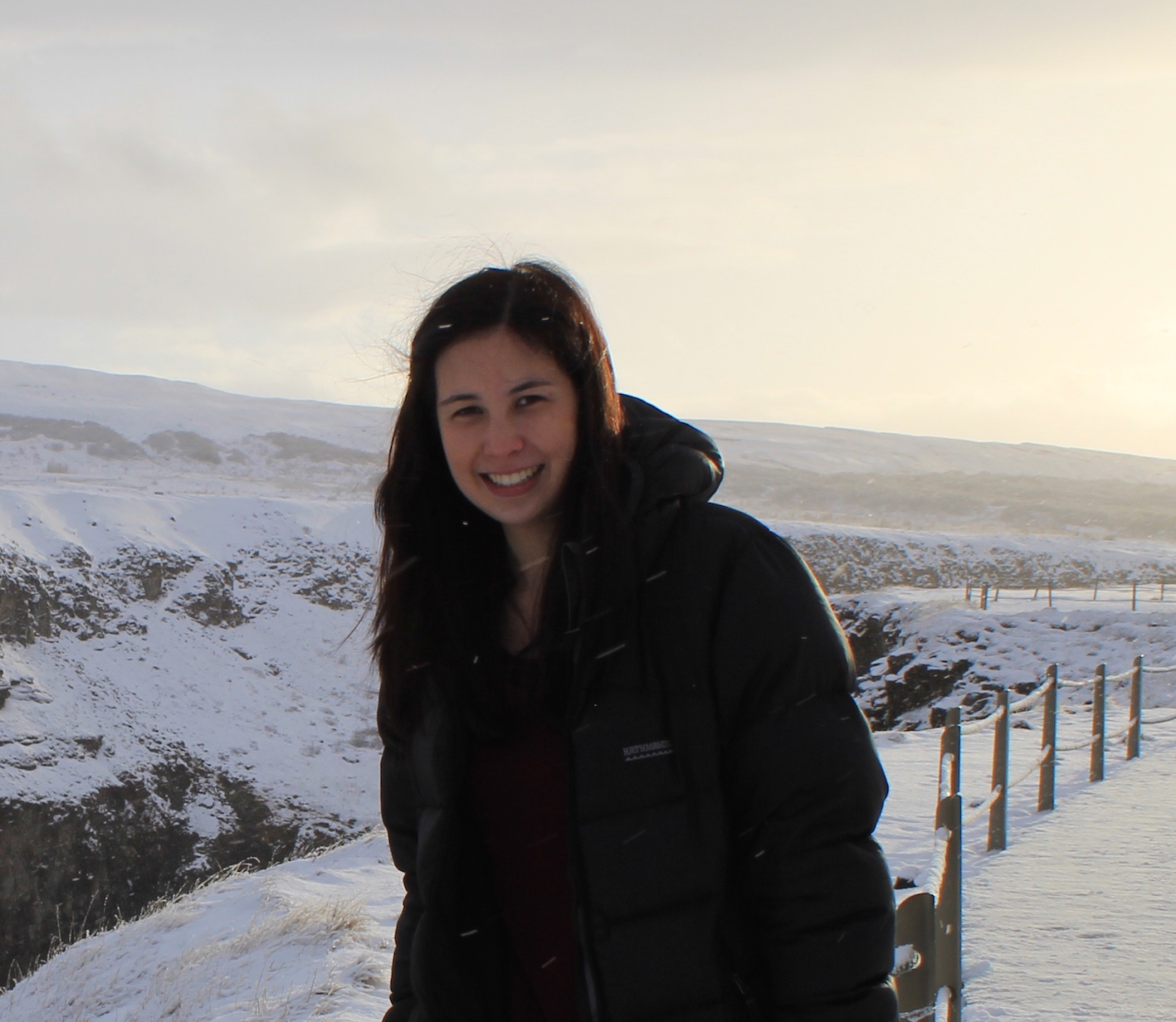
Congratulations to PhD candidate Nicky Wright for being awarded a 2015 Petroleum Exploration Society of Australia (PESA) NSW Student Study grant. Well done!
Congratulations to Honours student Nikita Golkin for winning a 2015 Petroleum Exploration Society of Australia (PESA) Scholarship! Nikita’s Honours project is on the formation of continental ribbons in the context of the North West Shelf.
Scher, H. D., Whittaker, J. M., Williams, S. E., Latimer, J. C., Kordesch, W, E, C., & Delaney, M, L. (2015). Onset of Antarctic Circumpolar Current 30 million years ago as Tasmanian Gateway aligned with westerlies. Nature, 523, 580-583.
Congratulations to Simon Williams and Tassie EarthByter Joanne Whittaker for co-authoring the paper in Nature.
In a project led by Howie Scher from the University of South Carolina they used fossil fish teeth recovered from the oceans around Australia combined with detailed tectonic reconstructions to shed new light on the origins of the world’s mightiest ocean current, … Read more…
Congratulations to Dr Ana Gibbons, Dr Sabin Zahirovic, Dr Joanne Whittaker and Dr Yatheesh Vadakkeyakath, whose paper “A tectonic model reconciling evidence for the collisions between India, Eurasia and intra-oceanic arcs of the central-eastern Tethys” is now the third-most downloaded paper on Gondwana Research over the last 90 days!
Most Downloaded Gondwana Research Articles
The paper already has 3 citations (not bad for a paper that just came out this month).
Citation
Gibbons, A. D., Zahirovic, S., Müller, R. D., Whittaker, J. M., & Yatheesh, V. (2015). A tectonic model reconciling evidence for the collisions between India, Eurasia and intra-oceanic arcs of the central-eastern Tethys. Gondwana Research. doi: 10.1016/j.gr.2015.01.001.
Congratulations to Dr Ana Gibbons, Dr Sabin Zahirovic, Dr Joanne Whittaker and Dr Yatheesh Vadakkeyakath, whose paper “A tectonic model reconciling evidence for the collisions between India, Eurasia and intra-oceanic arcs of the central-eastern Tethys” is now the third-most downloaded paper on Gondwana Research over the last 90 days!
Most Downloaded Gondwana Research Articles
The paper already has 3 citations (not bad for a paper that just came out this month).
Citation
Gibbons, A. D., Zahirovic, S., Müller, R. D., Whittaker, J. M., & Yatheesh, V. (2015). A tectonic model reconciling evidence for the collisions between India, Eurasia and intra-oceanic arcs of the central-eastern Tethys. Gondwana Research. doi: 10.1016/j.gr.2015.01.001.
Müller, R. D., Yatheesh, V., & Shuhail, M. (2014). The tectonic stress field evolution of India since the Oligocene. Gondwana Research. doi:10.1016/j.gr.2014.05.008. The tectonic stress field evolution of India since the Oligocene Download accompanying data – zip file
An EarthByte plate tectonic animation has recently been added to NOAA’s Science on a Sphere database. NOAA produces large interactive 3D spherical projection systems that are installed at museums, universities, schools and other institutes across the world (see Science On a Sphere map locations). The EarthByte animation is from the recent Gibbons et al. (2015) … Read more…
An EarthByte plate tectonic animation has recently been added to NOAA’s Science on a Sphere database. NOAA produces large interactive 3D spherical projection systems that are installed at museums, universities, schools and other institutes across the world (see Science On a Sphere map locations). The EarthByte animation is from the recent Gibbons et al. (2015) … Read more…
The Division of Natural Sciences at the University of Sydney offers a variety of Summer Scholarship opportunities for students in the 2nd or 3rd year of their undergraduate degree.
Research projects are available in most disciplines for a duration of between 4-6 weeks over the Summer holiday period (November-February).
The program is open to both current University of Sydney students as well as students from other Australian Universities. Each scholarship is valued at $497 (in accordance with APA rate) per week for the duration of the project. … Read more…
This week we’re excited to host our long-term collaborators from France, Prof Nicolas Coltice and PhD student Claire Mallard. They will be presenting their work as part of the Augury Project – a European Research Council funded initiative to study the Earth’s evolution of mantle convection and plate tectonics. They spent two weeks field mapping in … Read more…
